
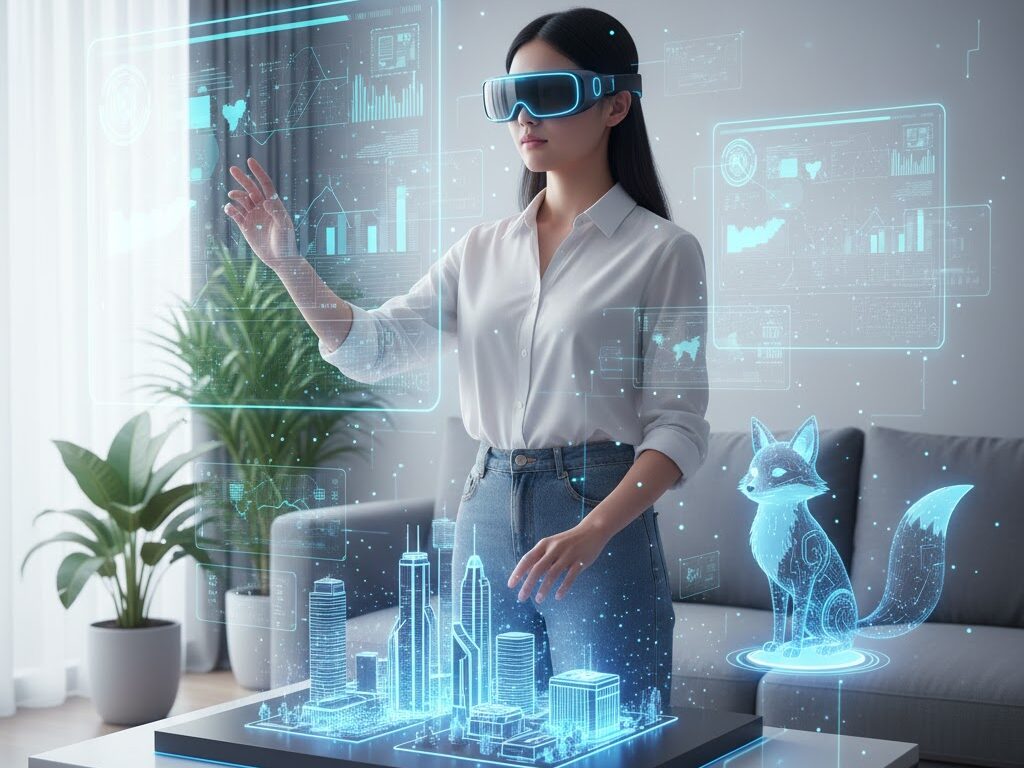
The Moment the Web Stopped Being a Tool — and Started Becoming a Partner
If you sit still for a minute — really still — you can almost feel the internet breathing around you.
Notifications flicker, devices whisper to each other, and somewhere, algorithms are quietly making decisions in your name.
It’s strange, isn’t it? For decades, the web was a thing we used.
Now it feels more like something that uses itself — something that’s learning how to understand us.
This is the story of Web 4.0, a version of the internet that isn’t just connected but conscious in its own way.
It’s the moment the web begins to think with us instead of waiting for us to click first.
1️⃣ The Road So Far — From Static to Symbiotic
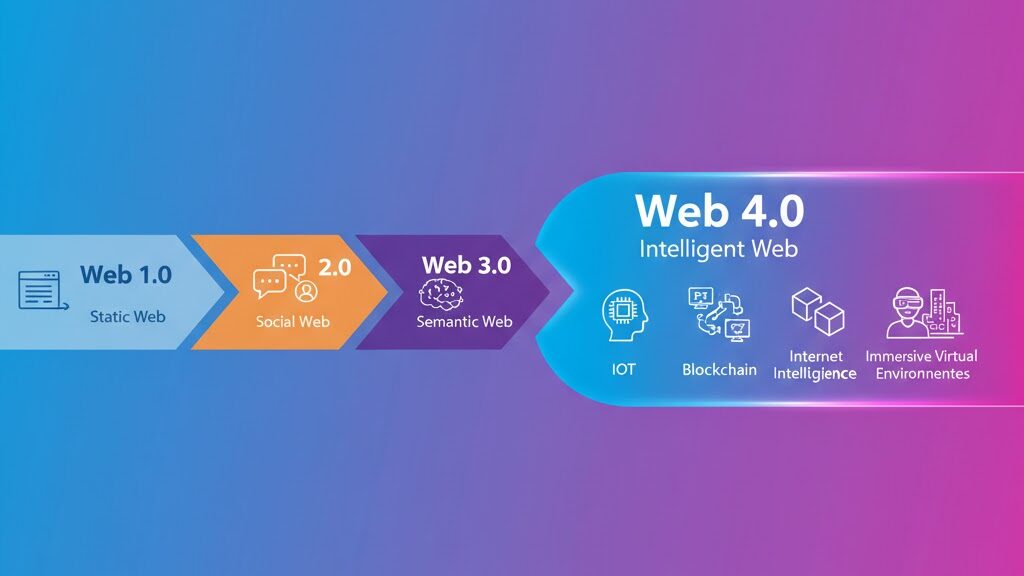
The internet didn’t wake up overnight.
It’s been quietly evolving—one version at a time — toward something smarter, more emotional, and strangely, more human.
Let’s trace the journey quickly:
- Web 1.0 was a digital library — you could read but not respond.
- Web 2.0 gave everyone a voice — social media turned users into creators.
- Web 3.0 taught the web to understand things — personalization, data ownership, trust.
- Web 4.0 is where we are now: an internet that’s beginning to relate to us.
The jump from 3.0 to 4.0 isn’t about hardware speed or shinier apps.
It’s about awareness — a web that doesn’t just know what we type, but senses what we mean.
2️⃣ What Is Web 4.0 Exactly?
Try to imagine an internet that behaves less like a search engine and more like a companion.
You don’t have to tell it every detail; it already understands your habits, your moods, your daily rhythm.
You say, “I’m cold.”
Your home system nudges the heater up two degrees and plays a cozy playlist.
You ask, “What should I cook tonight?”
It remembers your diet, your cravings, your groceries — and suggests something warm and easy.
That’s Web 4.0.
It’s not about browsing the web; it’s about living inside it.
3️⃣ The Brains Behind the Curtain
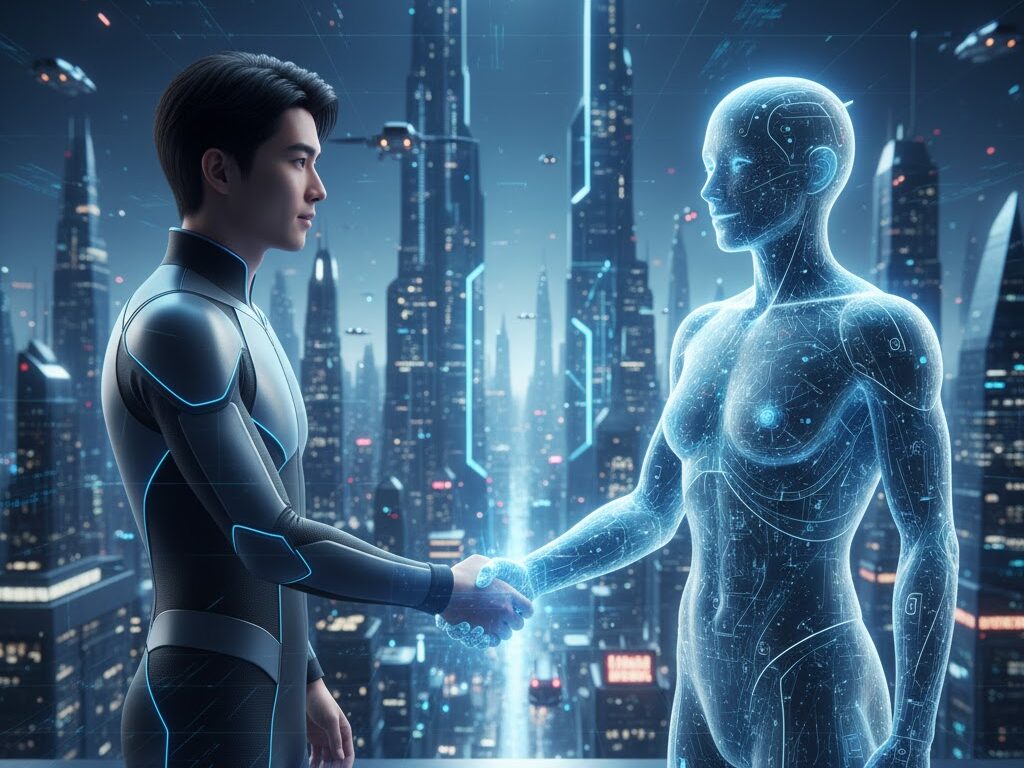
What gives Web 4.0 its magic isn’t one single invention — it’s a collection of technologies working like organs in a living body.
- Artificial Intelligence (AI) is the brain — it learns your language, your tone, even your humor.
- Machine Learning (ML) is the memory — it adapts and improves with every interaction.
- Internet of Things (IoT) is the body — thousands of tiny sensors linking your home, city, and world.
- Edge Computing is the reflex — processing data instantly, right where it happens.
- Quantum Computing is the dreamer — exploring possibilities too vast for normal logic.
- Decentralization is the conscience — making sure you, not corporations, own your data.
Together, they form an internet that feels less like code and more like collaboration.
4️⃣ From Data to Dialogue
For years, the web was about searching.
You asked; it answered.
Now, the conversation flows both ways.
You open a site, and it adapts before you even scroll.
It remembers what you like, but more importantly, what you don’t.
This shift — from information to intuition — is what makes Web 4.0 revolutionary.
It’s not just about access; it’s about understanding.
The web finally speaks human.
5️⃣ The Real-World Change — How Web 4.0 Feels in Daily Life
💼 Work That Feels Effortless
You log in for a meeting, and the system summarizes what everyone said last time.
It flags decisions left unresolved, tracks body language, and highlights moments of tension you might’ve missed.
It’s like having a silent co-worker who never forgets and never complains.
🏠 Homes That Feel Alive
You walk through the door, and your house already knows what kind of day you’ve had.
Lights adjust, your favorite scent diffuses, and a quiet playlist hums in the background.
You didn’t program it. It simply learned you.
🧠 Learning That Understands You
Education stops being one-size-fits-all.
A child who struggles with math gets animated examples instead of formulas.
A musician learns history through rhythm.
AI tutors shape themselves to curiosity, not just curriculum.
🏥 Health That Watches Over You
Your smartwatch doesn’t just count steps; it senses stress.
It spots patterns that even doctors might miss.
Hospitals become preventive, not reactive — care guided by quiet data rather than crisis alarms.
💳 Finance That Feels Personal
Your digital wallet knows your habits and goals.
It quietly saves more when you’re spending less, negotiates discounts you didn’t ask for, and warns you before a mistake, not after.
This is the web’s quiet promise: to make life simpler, not louder.
6️⃣ The Bright and the Broken
Every breakthrough brings its shadows. Web 4.0 is no different.
🌟 The Promise
- A world that truly listens to you.
- An internet that respects ownership and privacy.
- Work, education, and health that finally feel personalized.
⚠️ The Caution
- When systems learn emotion, how much should they know?
- Will empathy become another product feature?
- If everything predicts what we want, do we still make our own choices?
The truth is, Web 4.0 isn’t just about connection — it’s about boundaries.
The challenge is keeping the human in the loop.
7️⃣ A Quick Look Back — The Evolution of the Web
| Era | What It Was | How It Felt | Who Had Control |
|---|---|---|---|
| Web 1.0 | The read-only web. | Static, silent, distant. | Website owners. |
| Web 2.0 | The social web. | Loud, crowded, communal. | Big platforms. |
| Web 3.0 | The smart web. | Personalized, data-driven. | Users and blockchain networks. |
| Web 4.0 | The symbiotic web. | Predictive, emotional, intuitive. | Shared between humans and AI. |
The line from 1.0 to 4.0 isn’t a timeline — it’s an evolution of trust.
The web has gone from telling us what it knows to asking us how we feel.
8️⃣ The Emotional Internet
This is where things start to feel uncanny and beautiful.
Web 4.0 isn’t trying to replace emotion; it’s trying to recognize it.
Imagine watching a movie online. The web senses your facial expression, notices you smiled, and recommends something that feels similar not just in genre but in mood.
Or picture an online classroom that senses boredom and switches formats mid-lesson.
It’s empathy, translated into algorithms.
Some people find that exciting; others find it unsettling.
Both reactions are valid and deeply human.
9️⃣ The New Relationship Between Humans and the Web
For years, we built technology to extend our reach.
Now, we’re building it to extend our understanding.
Web 4.0 is the point where technology stops being a servant and starts being a partner.
It doesn’t just do what you say; it helps you decide what’s worth saying.
That’s both empowering and terrifying. Because once the web starts to understand us, it also starts to shape who we become.
💡 Conclusion The Future We’re Building Together
The internet began as a machine of knowledge.
Then it became a mirror of society.
Now, it’s becoming something closer to a human mind.
Web 4.0 isn’t about faster devices or shinier apps.
It’s about designing technology that feels more like us curious, emotional, imperfect, and alive.
But for all its intelligence, this new web still needs guidance.
Not from algorithms, but from people thoughtful, ethical, creative people.
At HagereApp, we see Web 4.0 as more than a digital revolution; it’s a human one.
It’s the chance to rebuild the web around empathy, not exploitation.
An internet that doesn’t just connect data but connects hearts.
Because in the end, the real question isn’t how smart the web will get —
It’s how wise we’ll be in shaping it.
#FIN