

A Glimpse Into a World That’s Already Changing
Sometimes I pause and wonder: how did we get here so fast?
Ten years ago, talking to our phone like a friend seemed silly. Who’d believe cars would drive themselves? Or that we’d ask a computer to write a poem for us?
Yet here we are, in 2025 — a time when groundbreaking ideas are no longer at the edges of labs, but already starting to touch our everyday lives.
In this article, let’s take a human-friendly walk through 10 emerging technologies that are quietly — and not so quietly — changing how we live, heal, move, work, and connect.
1. Structural Battery Composites — Materials That Do More Than One Job
Let me start with something most people have probably never heard of: structural battery composites (SBCs).
Think of it as materials science teaming up with energy technology to do more with less.”
The idea? What if the parts of a device or structure — say the frame, shell, or body — also stored energy, like a battery? Instead of having a separate battery + shell, you merge them. A phone’s casing, a car’s body, even parts of buildings could become energy reservoirs.
According to a World Economic Forum report, SBCs are among the top breakthroughs to watch in 2025. World Economic Forum
Why it matters
- A drone or electric vehicle built with SBCs could weigh less, because fewer separate parts.
- Devices might be slimmer without sacrificing battery life.
- Energy storage becomes a built-in property, not an add-on.
Challenges
Of course, making something that’s both strong and good at storing energy is tough. Durability, safety, and mass-production are hurdles. But researchers are pushing hard.
In short: SBCs may seem niche now, but they hint at a future where everything is multifunctional — doing more with less.
2. AI Agents & Multimodal Intelligence — Smarter Tools, More Human
When I say “AI,” most people think chatbots or voice assistants. But in 2025, we’re seeing the next layer: AI agents and multimodal intelligence.
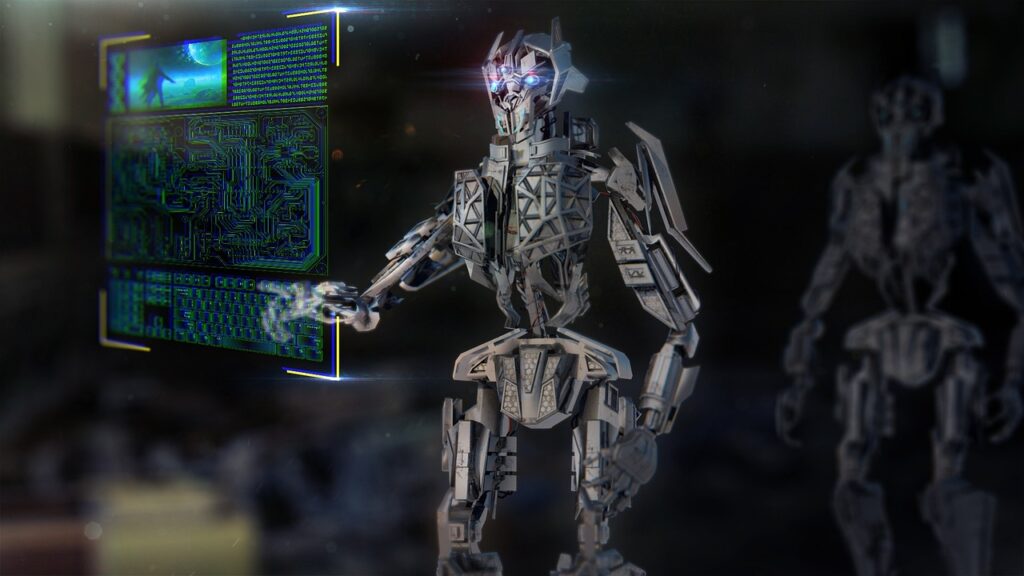
- Multimodal AI understands not just text, but images, audio, video, even gestures — in a combined way.
- AI agents act on your behalf — they can book meetings, manage your email backlog, generate sketches, run basic software tasks, and more.
McKinsey’s tech trend report notes how these human–machine collaboration models are evolving to use “multimodal inputs” and more natural interaction. McKinsey & Company
Real-life feels
Imagine you say: “Plan a trip to Addis in June, find a quiet guesthouse, and draft a packing list.”
Your AI doesn’t just search — it understands your preferences (quiet, local breakfast), checks weather, and sends you options — all in one conversation.
It’s not perfect yet, but these systems are already making work smoother, ideas faster, and creative blocks… well, less imposing.
3. Next-Gen Connectivity: Advanced 5G, 5G-Advanced, and Glimpses of 6G
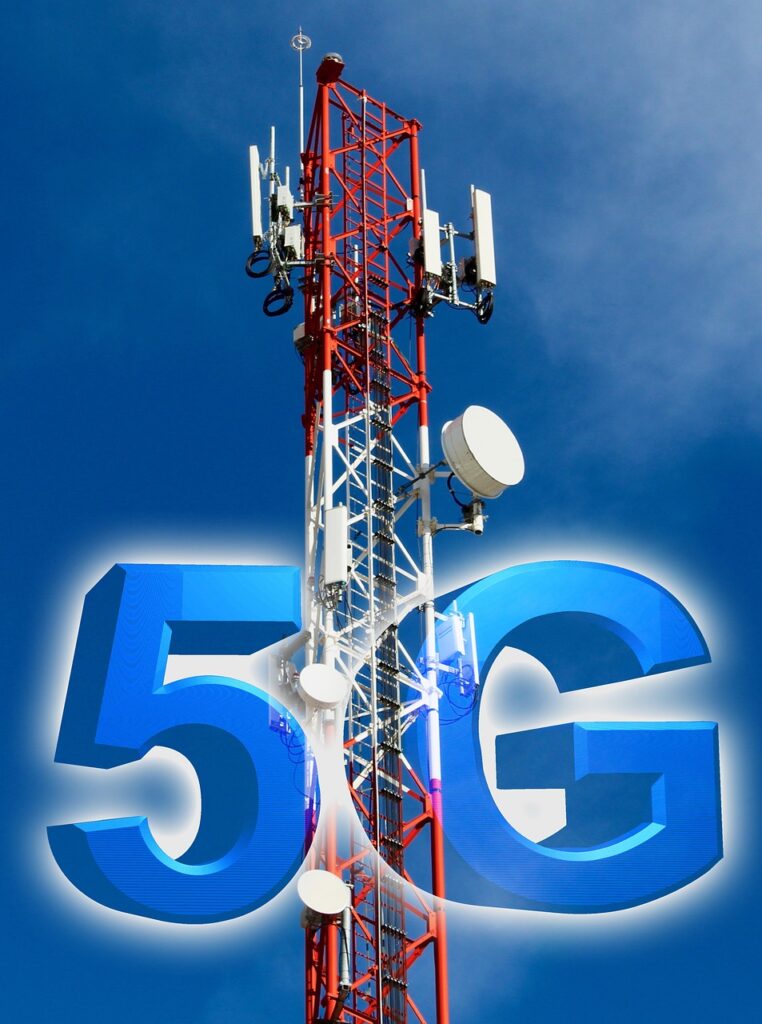
Every good tech change needs a backbone — and that’s network connectivity. In 2025, we’re not just using 5G; we’re pushing its limits and laying groundwork for what comes after.
- 5G Advanced (or 5.5G) is making 5G even more powerful — faster, lower latency, better efficiency.
- Meanwhile, early research and prototypes for 6G are underway, exploring terahertz frequencies, integrated sensing, and smart networks.
One key thing: these networks let things talk to things seamlessly — your car, your home, your drone, your health monitor — all connected.
5G’s role in XR, autonomous systems, and massive IoT setups depends on this connectivity. Wikipedia
4. XR — Beyond Screens, Into Worlds
“Extended Reality” (XR) blends Virtual Reality (VR), Augmented Reality (AR), and Mixed Reality (MR). In 2025, XR is no longer a novelty — it’s becoming a tool for many fields.
- Surgeons train on holographic patients before ever touching a scalpel.
- Architects walk clients through a building before it’s built.
- Classrooms let students visit faraway lands or historical eras.
XR changes how we experience the world. It’s not just seeing; it’s living digitally.
5. Engineered Living Therapeutics — Medicine Grown from Life
Biotech is evolving fast, but one of the most touching areas is engineered living therapeutics — using biology to heal itself.
Think: living cells engineered to fight disease, implantable tissues that repair damage, synthetic organisms delivering therapies inside us.
This is one of the WEF’s highlighted technologies for 2025. World Economic Forum
Why it’s powerful
- Traditional drugs sometimes treat symptoms; living therapeutics aim at root causes.
- Treatments become more personalized — grown for you.
- Less chemical waste, more biological harmony.
Of course, safety and regulation are big guardrails. But this is medicine inching closer to nature again.
6. Osmotic Power & Blue Energy — Tapping Nature’s Invisible Force
Here’s something poetic: generating energy from the difference in salt between seawater and freshwater. That’s what osmotic power (or “blue energy”) is about.
As fresh water flows into salt water, there’s a pressure difference. With clever membranes and systems, you can capture that pressure as usable electricity.
One of the WEF’s 2025 picks, this tech is still early stage, but holds unique promise — especially in coastal areas and river deltas. World Economic Forum
7. Micro- and Edge AI — Intelligence Where It’s Needed Most
“Cloud AI” is great, but data travels slower than thought. In 2025, a shift is well underway: AI on devices (edge AI) and tiny models (micro-AI).
- Your phone, camera, or sensor runs smart models locally — no need to send everything to remote servers.
- Reduced delay, better privacy, lower power usage.
This is critical when milliseconds matter — like in autonomous vehicles, wearable health tech, or smart sensors.
8. Synthetic Media & Content Watermarking — Creativity Meets Trust
We’re in a moment where machines can generate images, audio, and video so convincingly it’s hard to tell real from fake. That’s synthetic media.
At the same time, the WEF report points out that a related technology — content watermarking and provenance — must grow in parallel, so we know what’s genuine. World Economic Forum
So: while AI paints, sings, and scripts, we need systems that embed invisible tags, checksums, or signatures — to prove authenticity.
In short: art created by machines is only part of the challenge. Knowing which art is legit is equally crucial.
9. Advanced Materials & Composites — New Stuff, New Possibilities
Beyond SBCs, the world of materials is exploding with innovation.
From smart fabrics (that heal or adapt) to ultra-light aerogels, programmable matter, and self-assembling structures — these are materials that sense, change, and work with us.
Why does this matter?
- Buildings that adjust to weather
- Phones that repair microcracks
- Furniture that self-reshapes
When our raw materials get “smart,” everything built on top becomes smarter by default.
10. AI-Driven Climate & Energy Systems — Smarter Earth, Smarter Energy
Climate change is the big fight of our era — and 2025 is showing us how tech begins to take the fight seriously.
AI models manage smart grids, distributing power where it’s needed, storing excess, reducing waste.
They forecast weather with better precision, optimize irrigation, predict wildfires, and help reclaim land.
Because it’s not just about building more solar panels; it’s about making the energy we use smart — responsive, predictive, efficient.
McKinsey calls it part of the new wave of “human–machine collaboration” — where machines don’t replace humans, they augment our intuition and scale our reach. McKinsey & Company
🎯 Bonus: Neuromorphic & Brain-Inspired Computing
One future beat: neuromorphic computing — machines built like brains.
Rather than linear data pipelines, these systems use spiking neural networks, synapses, adaptable architecture. They’re better for perception, decision-making, and energy efficiency.
In 2025, we see early devices and chips rising that mimic brain function — a bridge between silicon and biology. Forbes lists it among key trends for the year. Forbes
🛠 What This All Means for You & Me
You might wonder: “This is cool, but how will my life change?” Here are some ways:
- Health & longevity — better diagnostics, therapies grown just for you.
- Mobility — lighter, smarter vehicles and seamless travel.
- Work & creativity — AI as partner, not threat.
- Energy & climate resilience — smarter systems that bounce back.
- Trust & truth — balancing synthetic creations with authenticity tools.
🧠 A Few Human Lessons to Carry Forward
- Ethics must ride shotgun.
With power comes responsibility. As synthetic media, biotech, and brain-like systems grow, we need strong voices in law, philosophy, culture. - Access matters.
These breakthroughs can widen divides if only the rich or certain regions benefit. Equitable access is part of progress. - Curiosity is your strongest tool.
At times technology outpaces regulation, but human creativity, empathy, and doubt keep us grounded. - Adapt, don’t just adopt.
Knowing these technologies exist is one thing. Knowing how to use them wisely (in business, life, society) is what separates innovators from spectators.