
Every time a new phone is released, the same debate starts all over again — Android or iPhone?
It’s almost like the tech version of coffee vs tea. Some people swear by Android’s freedom and creativity, while others can’t imagine life outside Apple’s clean and stable world.
The truth is, in 2025, both platforms have reached a point where they’re incredibly powerful. You can’t really go wrong with either. But they’re built on very different ideas.
- Android gives you room to adjust, and make the phone feel personal.
- iPhone focuses on control, polish, and smoothness everything just works, without much setup.
If you need to choosing between the two, this guide will help you look and understand which one fits your lifestyle better
1. Price
Money matters — that’s just reality. One of the biggest differences between Android and iPhone is how much you pay and what you get for that money.
With Android, you have freedom right from the start. You can buy based on your budget phone that costs as little as $150 or go all the way up to $1,200 for a flagship model like the Samsung Galaxy S25 Ultra or Google Pixel 9 Pro.
But you still get core Android features across all of them (access to Google services, apps, and full customization).
On the other hand Apple, plays in a different lane. Even its “budget” model, the iPhone SE, costs more than most mid-range of Android phones. But Apple makes up for that with durability and long-term value. Many people keep their iPhones for four or five years, and the resale price stays strong.
So, if you’re after flexibility, Android wins. If you prefer long-lasting investment, iPhone gives you more peace of mind.
2. Design
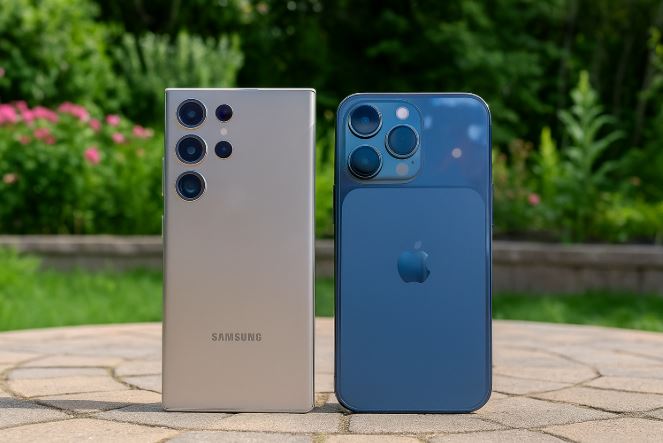
Apple focuses on consistency and elegance. Every iPhone follows a similar design (clean glass back, smooth metal edges, and balanced weight.) It feels premium, no matter which model you hold. Apple doesn’t chase wild trends; it perfects small details over time.
Android is the opposite : it celebrates variety and creativity. Each brand has its own identity. Samsung loves curved edges and massive screens. Google prefers minimal design with bold colors. OnePlus plays with slim frames and fast-refresh displays. You’ll find foldable phones, flip phones, and everything in between.
So it really depends on what kind of person you are. If you love a uniform and classy look, go iPhone. If you enjoy having choices and something unique, Android gives you that fun.
3. Customization vs Simplicity
Here’s where the real personality battle begins.
Android allowing your phone like your personal playground. You can change your home screen, app icons, fonts, and even the entire system theme. If you don’t like the default launcher? you can Download another one. Want to automate your daily routine? Use apps like Tasker or Shortcuts for Android. You can even install apps outside of Google Play if you want more freedom.
The iPhone, in contrast, keeps things simple and strict. Apple believes less choice equals fewer problems. Everything looks and works the same across all iPhones. You don’t waste time adjusting settings it just runs smoothly.
For people who like control, Android feels empowering. For those who just want their phone to “work” without tweaking every detail, iPhone feels like a relief.
It’s like the difference between cooking your own meal from scratch versus ordering from your favorite restaurant both are great, just depends on what kind of experience you enjoy.
4. Camera
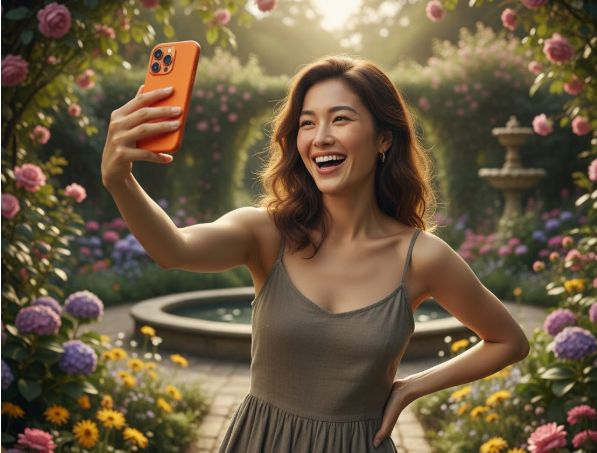
Cameras have become the biggest selling point for modern smartphones. Everyone wants better photos whether it’s in meal, travel, or social media content.
Apple’s cameras are well known in reliability. You open the app, snap a photo, and it almost always looks great clear colors, natural skin tones, and smooth contrast. Apple focuses on consistency. You don’t need editing skills to make your pictures look good.
Android phones, however, give you options and flexibility. Samsung and Google in particular push photography to new levels higher zoom, advanced AI tools, and professional manual controls. Some even let you shoot RAW and edit like a pro.
In 2025, both sides use strong AI enhancements. iPhones rely on Apple’s A18 Bionic chip for real-time adjustments, while Android phones use Google’s Tensor or Snapdragon AI for smarter image detection.
So, for quick, real-world results — iPhone wins. For creative photographers who love to experiment — Android gives more tools.
5. Software and Updates
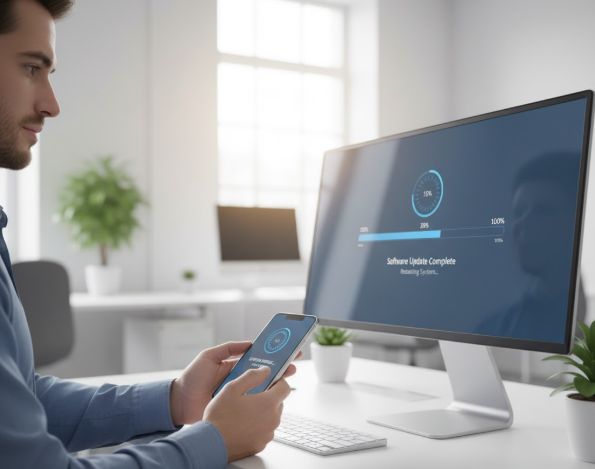
Apple takes the lead here, and it’s not even close.
Every iPhone gets major iOS updates for at least five years. That means even an iPhone 13 from 2021 is still running smoothly on iOS 19 in 2025. The experience stays uniform and secure across all models.
Android has improved, especially with Google and Samsung offering up to seven years of support for their latest phones. But smaller brands still fall behind. Sometimes updates arrive months late, and cheaper models stop receiving them after two years.
If long-term support and security matter most, the iPhone gives you unmatched consistency. But if you like trying new tech often, Android gives you the freedom to upgrade more frequently without breaking your wallet.
6. Apps and Ecosystem
This part often decides everything.
Apple’s ecosystem is like a tightly connected family.
- If you own a MacBook, Apple Watch, or iPad, everything syncs effortlessly.
- Copy text on one device and paste it on another. Answer calls on your laptop.
- AirDrop photos without thinking twice it feels magical because it just works.
Android has come a long way too.
- Google now connects Android phones with Chromebooks, Windows PCs, and even smart TVs using Fast Pair and Nearby Share.
- It’s more open and works across different brands, but it’s not as perfectly polished as Apple’s system.
As for apps, both platforms share nearly everything, but Apple still gets certain exclusive or better-optimized versions (especially creative tools and mobile games.)
If you’re already in Apple’s world, it makes sense to stay there. But if you prefer Google’s flexibility and want to mix brands freely, Android feels more open.
7. Battery and Charging Speed
Nobody likes waiting phone until charged, and this is one area where Android truly shines.
Top Android phones now come with super-fast charging, going from 0 to 100% in under half an hour. Brands like OnePlus, Xiaomi, and Realme have pushed charging speeds beyond 100W safely. Many also offer larger batteries that last longer throughout the day.
Apple finally adopted USB-C in 2025, which makes life easier for everyone, but charging speeds are still conservative (around 27W.) The reason is simple: Apple values battery health over speed.
In daily life, Android gets you charged up faster, while iPhones tend to age better — their batteries hold capacity longer after years of use.
So, if you’re always on the move, Android’s fast charging is unbeatable. If you keep your phone for years, iPhone gives you reliability.
8. Privacy and Security
Privacy has become one of the biggest concerns in modern tech, and Apple made it part of its identity.
iPhones offer tight control over your data. Apps have to ask permission before tracking, and most background tracking is blocked by default. You also get end-to-end encryption for messages and FaceTime.
Android, being open-source, gives developers more freedom — but that also means slightly higher risk. Google has added strong security layers and a new Privacy Dashboard to show what each app accesses, but it’s not as strict as Apple’s system.
If privacy is your top priority, Apple is still the safer choice. But if you’re okay managing permissions manually and want more flexibility, Android remains a good balance between control and openness.
9. Performance and Speed
Apple builds both the hardware and software, and that’s its biggest advantage.
The A18 Bionic chip inside the latest iPhones runs fast, efficient, and cool.
Apps launch instantly, animations are smooth, and the phone rarely slows down even after years of use.
Android performance depends on the manufacturer.
High-end phones like the Galaxy S25 Ultra or Pixel 9 Pro are lightning fast with Snapdragon Gen 4 chips, but cheaper Android models may lag under heavy use.
Gaming and multitasking are now equally strong on both, but Apple’s optimization still feels cleaner overall. If you care about raw power and smoothness, the iPhone keeps a slight lead.
10. The Experience of Living With Each
This matters on personal preference.
Owning an iPhone feels like joining a private club. Everything is smooth, polished, and unified. You don’t have to think too much — the phone handles it for you. But you also give up some control. You can’t easily change the look, manage files freely, or install apps outside the App Store.
Android, on the other hand, feels like a canvas. You can shape it however you want — from wallpapers to widgets to launchers. It feels alive and personal. But with freedom comes responsibility — things can break, updates vary, and experiences differ by brand.
If you like to experiment, change things, and get more for your money, go with Android. It is preferable for those who enjoy technology to adjust to it rather than the other way around.
The iPhone has the sense of a well-made, faultless automobile.
You can tweak, adjust, and push Android to its limits, making it feel like a specially designed computer.
Neither is incorrect; it simply depends on your personality.
In conclusion, what should you pick?
The basic fact is that there will only be a better phone for you in 2025, not a single “better” phone.
If you appreciate reliability, long-term support, and ease of use, go for the iPhone. It is intended for users who do not care about settings or issues and prefer a simple, bug-free experience.
The iPhone and Android are both more developed. They are merely distinct manifestations of our technological usage, not competing for dominance.
Therefore, avoid brand battles and trends. Consider your routine, your spending, and the things that are truly important to you on a daily basis. Because a phone that fits into your life naturally is better than one with the best camera or chip.